SELF-VIEW
Stop watching yourself
A Stanford survey of 10,322 people found "mirror anxiety" from the self-view was the largest contributor to fatigue for women. Hide it once your framing is set.
See the numbers doodlemeet
Start
WHAT THE RESEARCH SAYS
Video calls ask more of us than they seem to.
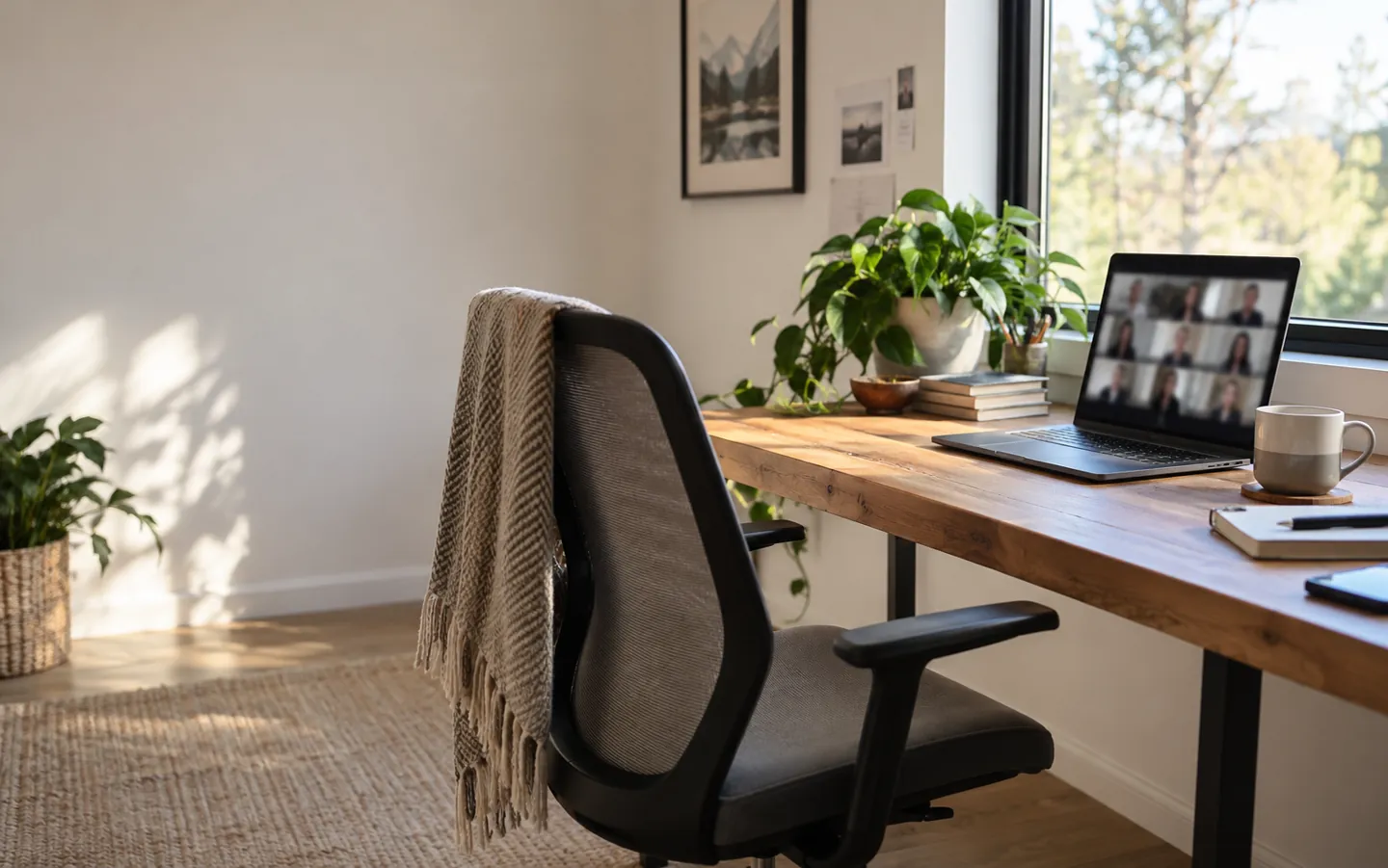
Researchers at Stanford set out four likely reasons video meetings tire people out, and later studies tested some of them. The good news: most of the fixes are settings and habits you can change today.
MEET WELLfewer pixels, more breaks
Check your callsKeep in mind
THE SHORT ANSWER
A 2021 Stanford paper proposed four causes.
Later studies backed up the self-view and camera ones.
SELF-VIEW
A Stanford survey of 10,322 people found "mirror anxiety" from the self-view was the largest contributor to fatigue for women. Hide it once your framing is set.
See the numbersBREAKS
The Stanford paper suggests audio-only breaks and turning your body away from the screen to ease the effort of constant nodding and eye contact.
How to do itDISTANCE
Exit full-screen, make the window smaller and use a separate keyboard so the grid of faces sits further away.
Check your callsA QUICK CALL CHECK
Pick the part of video meetings that tires you most to see what researchers suggest. The bar shows how strong the evidence is: proposed in theory, or measured in a study.
Based on a 2021 Stanford paper in Technology, Mind and Behavior, a 2021 Stanford survey and a University of Georgia field experiment in the Journal of Applied Psychology.
TWO NUMBERS WORTH KNOWING
One figure from a large survey,
one from a month-long workplace experiment.
13.8%
Women very to extremely fatigued after calls
In a survey of 10,322 people, 13.8% of women and 5.5% of men felt very to extremely fatigued after video calls: about one in seven women against one in 20 men.
SURVEY · STANFORD 2021
103 employees
Employees who switched cameras on and off
Half kept cameras on and half off for two weeks, then swapped. Cameras on meant more fatigue, which then reduced engagement and speaking up. Women and newer employees felt it most.
FIELD EXPERIMENT · UNIVERSITY OF GEORGIA
The Stanford survey also found women had the same number of meetings per day as men, but their meetings tended to run longer and they were less likely to take breaks between them.
FOUR CHANGES TO TRY
None of these needs new equipment. Most are a setting or a habit, and they come straight from the research.
Step 1
Check how you look once, then switch off self-view so you are not watching a mirror all meeting.
Step 2
Leave full-screen mode and shrink the call window so faces do not loom large and close, as if in your personal space.
Step 3
Sit further from the camera, or turn video off for a while, so you can shift and gesture freely.
Step 4
Build in short breaks and audio-only moments rather than running calls back to back.
A FAIR CAVEAT

The 2021 Stanford paper presented its four causes as theoretical arguments that had not yet been directly tested, aiming to point out design flaws rather than blame video calling itself.
Later work tested parts of it: the Stanford survey linked self-view and feeling trapped with fatigue, and the University of Georgia experiment showed camera-on days were more tiring, even after accounting for how many meetings people had.
Questions
A 2021 Stanford paper proposed four reasons: close-up eye contact, constantly seeing yourself, reduced movement and the extra mental effort of sending and reading signals on screen.
The Stanford paper suggests hiding self-view once your framing is set. A later Stanford survey of 10,322 people found mirror anxiety from self-view was the largest contributor to fatigue for women.
A University of Georgia experiment with 103 employees found camera-on days were more tiring. The researchers suggest giving people more choice over video rather than turning cameras off entirely.
Yes. The Stanford survey found about one in seven women versus one in 20 men felt very to extremely fatigued after calls. In the Georgia study, women and newer employees felt camera effects most.
Researchers suggest hiding self-view, shrinking the call window, sitting further from the camera and taking audio-only breaks between or during long calls.
Destination
Updated
ABOUT THIS NAME
doodlemeet.com is part of the DoodleSale portfolio. It isn't in an auction right now, but you can ask about leasing it.